

As climate policy hardens into market reality, H.EcoTech Festa 2026, a daylong gathering built on the idea that “the environment is money,” recasts environmental challenges as sources of value.
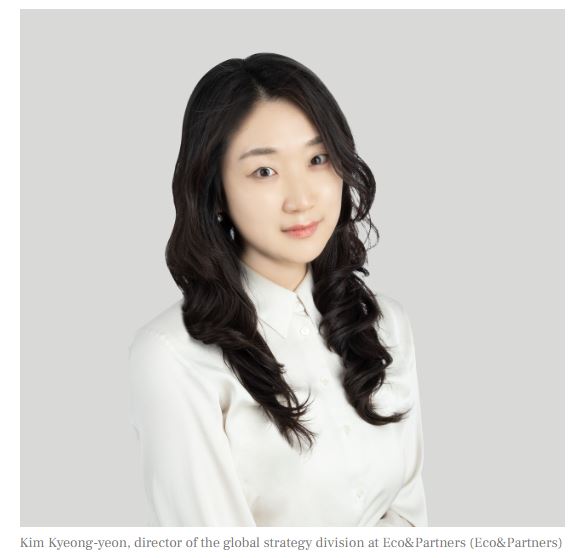
For Kim Kyeong-yeon, director of global strategy at Eco&Partners, that mindset is what could set companies apart in the years ahead. The Seoul-based advisory firm has spent the past decade linking environmental and sustainability practices to cross-border deals.
“We are moving from seeing the environment as something to protect to treating it as a source of new business and market creation,” Kim said during an interview with The Korea Herald. “As carbon rules and supply chain standards tighten, companies that fall behind may struggle to operate, while those that prepare early can capture new opportunities.”
Circular economy models are shifting from waste management to industrial plays, from recycled materials to battery recovery, Kim said, adding that the field has become increasingly multidisciplinary.
Operating in more than 20 countries across Asia, Latin America and the Middle East, Eco&Partners works with governments and institutions on climate targets and infrastructure to help build carbon and circular economy markets.
“It’s not about expanding a network,” Kim said. “It’s about defining problems together and building something that can scale into a market.”
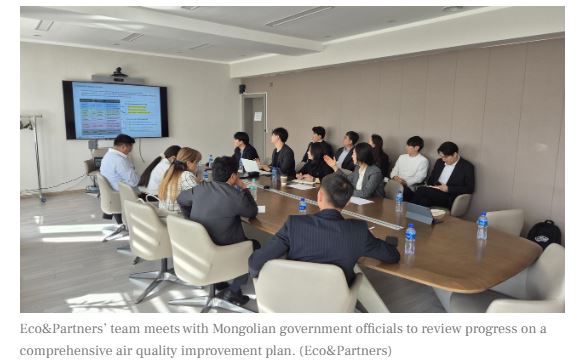
That approach is most evident in developing economies, where climate ambition often outpaces execution. In Mongolia, for instance, the firm has worked with the government to design emissions reduction projects aligned with national targets, while embedding structures that allow the outcomes to be transferred internationally as carbon credits.
“This lowers entry risks for Korean companies while enabling them to secure both carbon credits and investment returns,” Kim said. “It also suggests a new model for overseas expansion, combining investment with emissions reduction projects, rather than just exporting technology.”
A similar logic underpins the firm’s work in Medellin, Colombia, where it helped redesign recycling systems for construction and electronic waste by adapting Korea’s extended producer responsibility model, under which producers are responsible for recycling, to local conditions.
“Many countries have the rules, but not the enforcement,” she said. “Making them work requires building demand through tracking systems, certification and public procurement so recycled products are actually used.”
In Southeast Asia, where electric vehicle adoption is accelerating but end-of-life battery systems remain underdeveloped, the opportunity is even more pronounced. Korea’s strength lies not just in recycling technology, but in integrated systems that link collection, reuse and recycling under clear regulatory frameworks.
“By combining government-to-government cooperation with pilot projects, this creates a foundation for Korean companies to transition from one-off exports to longer-term business,” Kim said.
For Korean companies, Kim advised developing the capacity to measure emissions accurately and align systems with client demands, as carbon disclosure becomes a condition of doing business. For younger professionals, this means focusing on where data, policy, finance and execution intersect, she added.
To discuss the environment as a source of competitive advantage, Kim will participate as a panelist at H.EcoTech Festa 2026, to be held at Yonsei University’s Baekyangnuri Hall on May 7.
minmin@heraldcorp.com
https://www.koreaherald.com/article/10718781





 이전글
이전글