

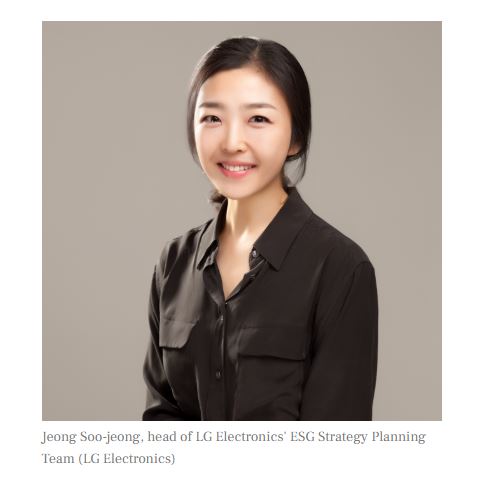

Jeong Soo-jeong's case for sustainability at LG Electronics comes down to what can be counted.
"When it comes to proving impact, in the end, numbers are the most effective thing," the head of LG's ESG Strategy Planning Team said in a recent interview with The Korea Herald, ahead of H.eco Tech Festa 2026, where she will join a panel on how environmental performance is turning into a source of competitive advantage.
That conviction shows up in how the Korean electronics maker has begun booking sustainability outcomes as commercial ones. LG received carbon credits from the executive board of the UN Framework Convention on Climate Change for selling high-efficiency refrigerators in India that cut electricity use.
"The credits came back to us in return for the electricity we helped customers save," Jeong said, pointing to the case as a textbook example of how an environmental investment can become a tradable asset on a corporate balance sheet.
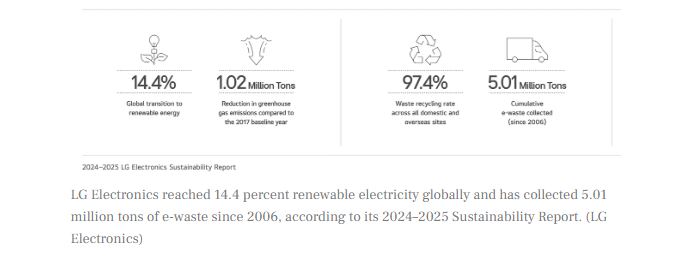
That logic runs through LG's 3C-and-3D framework, which organizes its ESG agenda around carbon neutrality, circularity and clean technology alongside workplace safety, diversity and accessibility. Under that structure, LG hit its 2030 waste recycling target of 95 percent six years early, reaching 97.4 percent across domestic and overseas sites in 2024. For its seven core product lines, the company has tracked use-phase carbon emissions for years, with the figure declining every year it is reported.
Those measurable gains, Jeong argues, answer the question corporate boards are increasingly pressing on ESG teams: whether environmental spending pays.
"Very simply, cutting carbon emissions means saving energy and saving cost," she said. "When our sincerity is felt by customers and stakeholders, it shapes their next choice of partner. That is money too."
External benchmarks echo the point. LG Electronics was selected in the top 1 percent of S&P Global's Corporate Sustainability Assessment for two consecutive years, and evaluates well on MSCI and EcoVadis, Jeong noted.
Rising AI-driven electricity demand is also reshaping where environmental technology pays off, she added. As data-center and device power consumption climbs globally, energy-saving solutions such as LG's AI-enabled HVAC systems are being recast from cost items into growth engines for a manufacturer moving deeper into commercial climate solutions.
Operating across dozens of jurisdictions, Jeong conceded, is its own kind of tax on ESG teams. Different markets apply different refrigerant rules, different disclosure frameworks such as the EU's Corporate Sustainability Reporting Directive, and often different product design implications.
"It is a bit like needing an extra travel adapter because every country has a different socket," she said.
Her message to students eyeing careers in the field, against the backdrop of political pullback in Washington and elsewhere, was firm.
"People say ESG is shrinking, but my workload hasn't shrunk a bit."
Jeong joins panelists from Kakao Bank, Yulchon and Eco&Partners at Yonsei University's Baekyangnuri Hall on May 7.
mjh@heraldcorp.com