
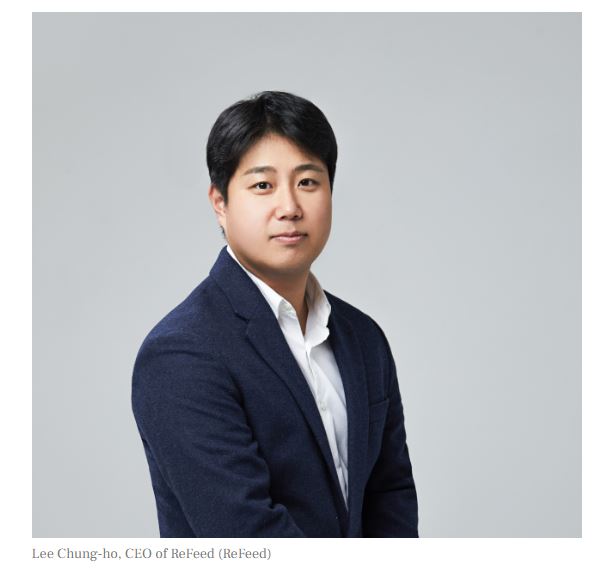
The future of aviation fuel may turn less on how it is produced than on how its raw materials are collected, according to ReFeed CEO Lee Chung-ho.
The company is building a business around used cooking oil -- or what Lee calls "liquid gold" -- an increasingly critical feedstock for sustainable aviation fuel, or SAF. With SAF mandates expanding in Europe and set to begin in Korea in 2027, demand for such feedstocks is expected to increase.
"The success of the SAF industry depends not on producing the fuel, but on securing the feedstock supply chain," Lee said in an interview with The Korea Herald ahead of H.eco Tech Festa 2026.
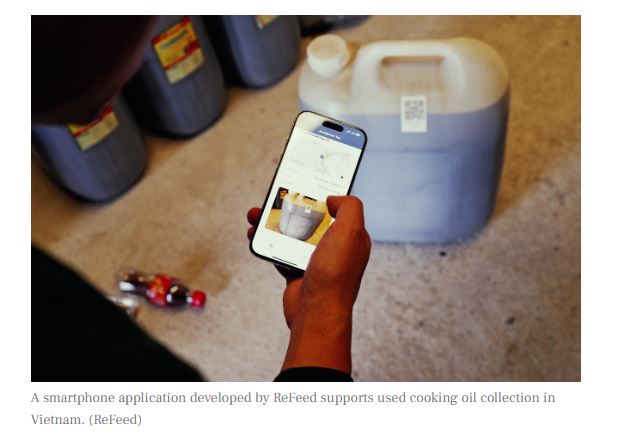
That insight led ReFeed into the market for used cooking oil, much of it generated across Southeast Asia. Three years ago, the company entered Vietnam and built a collection network from the ground up, backed by patented technology that digitizes the process.
"In Vietnam, traditional collectors dominate the used cooking oil market but lack the technology to enable certification, contributing to opacity and illegal reuse. Newer entrants, meanwhile, often lack field experience," Lee said.
ReFeed's edge lies in combining both, running its own collection network while developing technology aligned with global standards. Portable devices measure water content and weight inside opaque containers, enabling real-time verification where visual checks fall short. Built from field experience, the solutions could prove a “game-changer,” in Lee’s words.
The company has Asia in its sights, where used cooking oil supply is abundant but collection and certification systems remain underdeveloped. For now, it is focused on emerging markets, with developed markets such as Japan next in line.
In Korea, where the used cooking oil market is estimated at 200,000 to 300,000 metric tons a year, Lee said clearer legal classification, stronger incentives and stricter traceability at the collection stage are needed to unlock its potential as SAF feedstock.
According to Lee, for years to come, demand for biofuel inputs is expected to outpace supply as SAF mandates expand and similar decarbonization efforts emerge in shipping. "As production capacity increases, competition for feedstock will intensify, making transparent, data-driven sourcing more important," Lee said.
Yet the business cannot be built on narrow expertise. “Collecting oil, verifying quality and selling to global refiners each require a different kind of expertise. No single field is enough to complete the puzzle.”
That complexity, Lee suggested, is precisely where opportunity lives. Climate tech is still in its early innings, leaving the door open for those willing to dive in, define the problems and build the solutions themselves.
"The circular economy is no longer charity work," he said. "It is a global-scale business opportunity where protecting environmental values and advancing your career are no longer in conflict. That era has already begun."
Lee will speak at H.EcoTech Festa 2026 on May 7 at Yonsei University in Seoul to take part in discussions on turning sustainable ideas into global opportunities.
minmin@heraldcorp.com
https://www.koreaherald.com/article/10728740





 이전글
이전글